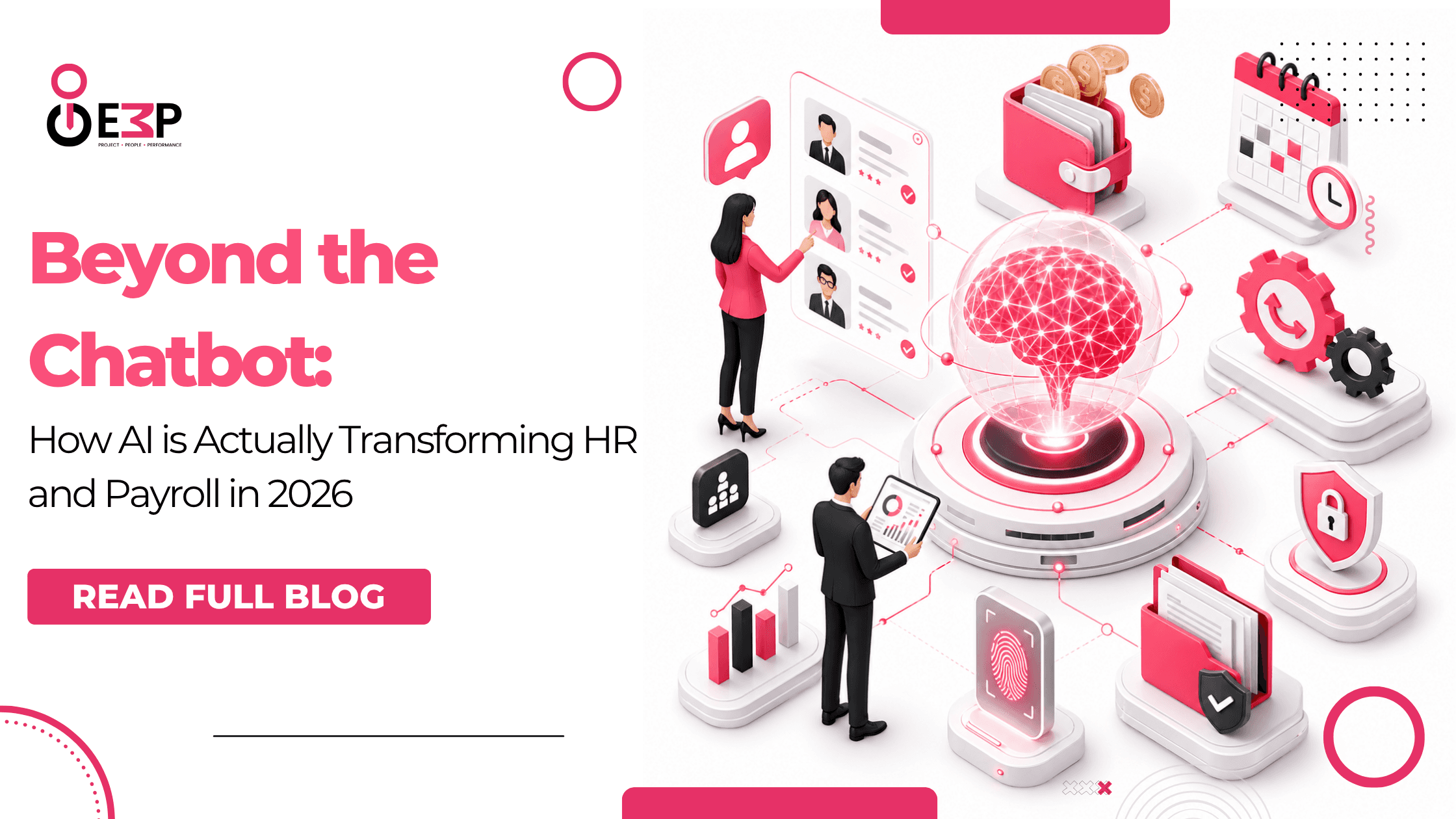
Remember a few years ago when every software company slapped the word "AI" onto a basic automated chatbot and called it a revolution?
Thankfully, we are finally past that phase. In 2026, Artificial Intelligence in Human Resources isn't about talking to a robot to check your leave balance. It has become an invisible, foundational engine that runs in the background, shifting HR teams from reactive administrators to proactive strategists.
If you are wondering what "AI in HR" actually looks like today, it’s less sci-fi and much more practical. Here is how it is actively reshaping payroll, compliance, and people management.
1. From Calculating Payroll to "Anomaly Detection"
Historically, running payroll meant spending days staring at spreadsheets, double-checking tax slabs, and praying you didn't miss a loss-of-pay (LOP) day.
Today, AI doesn't just calculate numbers; it audits them in real-time. Modern payroll systems use machine learning to understand your company's historical payroll patterns. Before you even hit "process," the AI runs a micro-audit and flags anomalies.
"Hey, this employee’s TDS deduction dropped by 40% this month compared to last. Are you sure this is correct?" * "This team member has 3 days of missing attendance but no leave applied. Flagging for review."
It is zero-touch payroll where the software does the heavy lifting, and the HR manager simply reviews the exceptions.
2. Predictive Burnout and Retention
Employee turnover is incredibly expensive. In the past, HR only knew an employee was unhappy when they handed in their resignation letter.
In 2026, AI connects the dots between disparate data points to predict burnout before it happens. By analyzing subtle patterns—like an employee consistently logging in late, skipping mandatory breaks, taking sudden isolated sick days, or submitting delayed Daily Status Reports (DSRs)—the system can flag a "flight risk."
This gives HR and team leads a window of opportunity to intervene, offer support, or adjust workloads before the exit interview.
3. AI as the DPDPA Privacy Guardian
With the strict enforcement of the Digital Personal Data Protection (DPDP) Act, managing data privacy is a massive liability. You can't just leave PAN cards and bank details sitting in an open digital drive.
AI is now being used to act as an automated compliance officer. It scans your internal systems to identify and classify Personally Identifiable Information (PII). If an employee leaves and exercises their "Right to be Forgotten," the AI instantly locates every instance of their data across the platform and executes a secure, compliant erasure. It ensures that role-based access is strictly maintained, alerting you if someone tries to download sensitive salary data they shouldn't have access to.
4. Hyper-Personalized Skill Mapping
The days of static “annual performance reviews” are largely over. AI is helping companies map their internal talent pool dynamically.
When a new project lands, AI can scan the profiles, past DSRs, and feedback metrics of your entire workforce to recommend the exact right people for the job. It identifies skill gaps across the company and can even trigger automated, personalized learning paths for employees to help them upskill for future roles.
The Reality Check: AI Needs Good Data
Here is the catch: Artificial Intelligence is only as smart as the data it sits on. If your attendance data is in a biometric machine, your payroll is on an Excel sheet, and your performance reviews are in Gmail, an AI cannot help you. It needs a unified dataset to connect the dots.
This is exactly why a unified platform like Go-EMP is critical for modern businesses. By consolidating Time Management, Precision Payroll, and People Ops into a single, secure sidebar, you create a clean, centralized data ecosystem. Go-EMP doesn't just store your data; it organizes it so that intelligent automation can actually do its job—giving you flawless payroll and deep team insights without the manual hassle.
The Bottom Line
In 2026, AI is no longer a luxury feature for enterprise corporations; it is a baseline expectation for any growing business. It isn't here to replace HR professionals. It is here to take away the administrative drudgery so you can get back to what actually matters: building a great culture and taking care of your people.